
‘I can help bridge the gap’: Bethany's journey to qualifying as an Employment Solicitor
A fluent Spanish speaker originally from Minnesota, Bethany has spent over a decade helping migrant workers access the same rights and opportunities as citizens. After moving to London in 2016 to pursue an MSc in Migration, Mobility and Development at SOAS University of London, she soon started working for IRMO (the Indoamerican Refugee and Migrant Organisation), supporting migrant people trapped in precarious work to move into better-paid and more stable jobs.
It was at IRMO where she first witnessed shocking labour exploitation and abuse Latin American migrants experience in the UK. "I could see a lot of these people weren't in a union, or the union couldn't speak Spanish," she says, "and I realised I could help to bridge that gap."
That ambition brought her to the Work Rights Centre, where she first joined as a volunteer in spring 2020, becoming a part-time caseworker a few months later. This was long before the charity had any solicitors on staff, and her work centred on supporting largely self-employed workers to recover unpaid wages or start the ACAS process.
Donate
We offer expert advice from qualified solicitors and case workers to help the most disadvantaged people in Britain access employment justice.
As the charity has grown, so too has the complexity of Bethany's casework and breadth of her knowledge. When Dr Sarmila Bose joined in 2022 as the charity’s first Employment Solicitor, Bethany's legal work experience really began in earnest. With Sarmila’s oversight and support, she was able to take on more complex cases and support clients all the way from their first consultation to final hearing at the Employment Tribunal.
The Work Rights Centre was set up to help migrant and low-paid people furthest from justice, and it’s the cases that tackle intersecting disadvantages that Bethany is most proud of. A Sri Lankan woman we will refer to as Tina*, was working as a migrant care worker when she was assaulted at work by a client. She was pregnant at the time, and after a consultation with Bethany, it became clear that her employer had not done enough to protect her health and safety as a pregnant worker.
"Tina suffered immense physical and psychological distress, and was terrified for her unborn child," Bethany says. "The layers of vulnerability - being a migrant, pregnant, in a new country, working with clients who could be dangerous - made this case feel extra important. If we hadn't taken her case on, it's incredibly unlikely she'd have got help anywhere else."
Tina's baby was born healthy, but she still lives with lasting physical impairments from the attack. Bethany hopes that the settlement will go some way in supporting her family in the future.
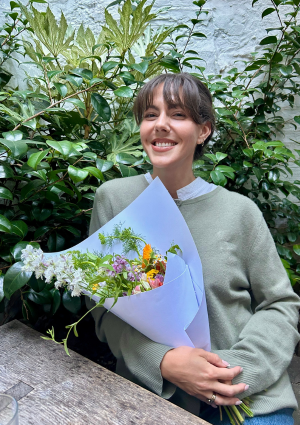
Bethany celebrating passing her exams
Qualifying as a solicitor while working full-time was no small feat. The SQE exams, Bethany says, were the hardest part of the journey: "there’s vast amounts of legal knowledge to cover, those were scary and difficult. Even when you sit them, you don't feel prepared, you just hope you are."
The Work Rights Centre supported her with dedicated study days and covered the cost of her exams, the last of which she passed in May, and was admitted to the roll of Solicitors on 1 July 2026. "I know people in legal roles who didn't get any study leave, so I'm really pleased with that support,” she says.
Looking ahead, Bethany is training in advocacy and will soon conduct her first in-person cross-examination at a full final hearing. Longer term, she hopes to build a career spanning both employment law, which she calls "ever-changing", and corporate law, which will become increasingly relevant as AI reshapes how companies treat their workers.